Mathematics is not rational, really!
It's time to take this seriously

…they’re, what, a ten-million-neuron network hooked up to a syntax engine and a crappy knowledge base? What kind of basis for intelligence is that?
… That’s what they’ll say about you, Bob.
(Charles Stross, Accelerando)
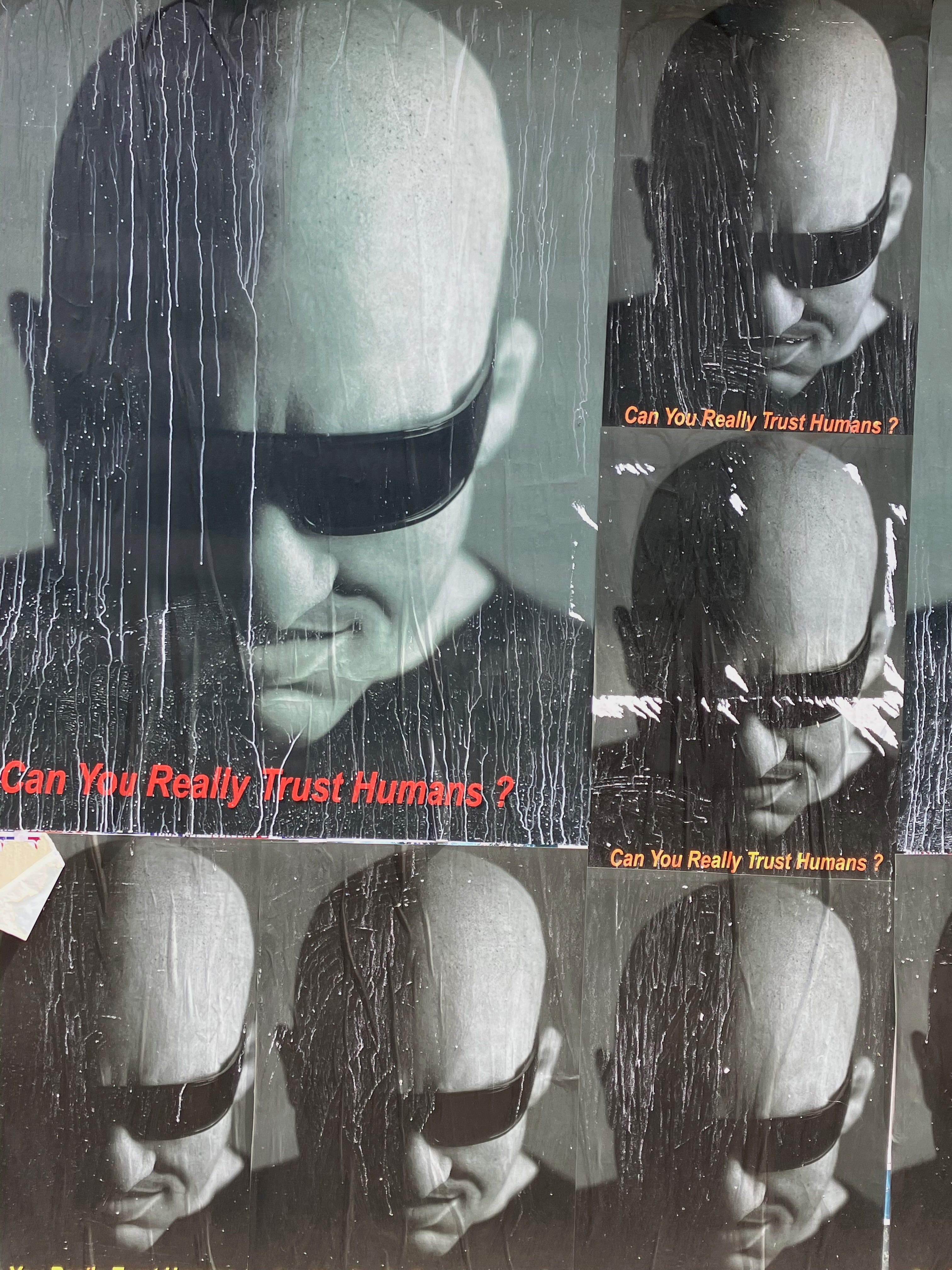
Almost three years ago I wrote a post entitled “Mathematics is not rational,” stressing the affective side of the discipline, as evidenced in this quotation from Marston Morse:
The creative scientist lives in ‘the wildness of logic’ where reason is the handmaiden and not the master.
Some of what I heard about AI at the International Congress of Mathematicians in Philadelphia, where I took part in a panel discussion following Jim Portegies’s presentation of the Leiden Declaration on Artificial Intelligence and Mathematics, encouraged me to return to the question, this time treating rationality analytically rather than metaphorically.
The "Author" is a social convention
Anyone attending the ICM will have reached the conclusion that, in the two months since it was released, the Leiden Declaration has come to represent something of a consensus among mathematicians. It had quickly been endorsed by the Committee on Publishing of the International Mathematical Union, which organized our panel discussion, then by the IMU as a whole1, and was (reportedly) mentioned prominently in (IMU Secretary General) Christoph Sorger’s speech at the Closing Ceremony. In between, Terence Tao confirmed and highlighted his wholehearted endorsement of the Declaration in his extremely well-attended public lecture on “Mathematics in the Age of AI,” and most of the speakers at the “AI for Math” panel the following day made explicit reference to the Declaration.
While I have no doubt that Tao and the AI for Math panelists, like more than 3300 colleagues around the world, reasoned their way to their decision to endorse the Declaration, I want to stress that this decision is not strictly rational. Such a decision is not and cannot be the result of a formalizable sequence of well-formed logical formulas, each deduced from the last by the strict rules of logic, leading back ultimately to a small list of clear and self-evident axioms. Endorsement of the Leiden Declaration is a political decision, an expression of adherence to certain values. Each endorser came separately to the conclusion that the Declaration, either in its entirety or (more realistically) for the most part, is consistent with their values; but the values are themselves the expression of deep personal attachments that manifest themselves as political. Here I am using the word political in its Aristotelian sense, and I quote the Stanford Encyclopedia of Philosophy on the ethical foundations for Aristotle’s Politics:
that happiness is the highest human good, that happiness is the activity of moral virtue defined in terms of the mean, and that justice or the common advantage is the political good.
I would say the Leiden Declaration is motivated by similar ethical foundations, but there’s nothing rational about that! Many political systems have been and are being designed, by very logical people, on quite opposite foundations. The vision of a mathematics without mathematicians, frequently shared by representatives of the tech industry, is also a political intervention, but it has nothing in common with Aristotle’s vision.
Since 1999 Tim Gowers has been elaborating on one version of such a vision, not as one that makes him “feel particularly happy” but that he believes is very likely.2 I bring this up because Gowers alludes to such a prospect when explaining why he has not (yet?) endorsed the Leiden Declaration. In particular,3 he objects to the following passage from the recommendations for individual mathematicians, which echos the second paragraph in the Declaration’s numbered list of values:
Affirm the humanity of authorship
Credit and responsibility continue to belong to humans within the mathematical community and should not be given to automated systems. Artificial intelligence may obscure, but does not replace, the collective human labor behind a result.
Gowers disagrees; he thinks that the status of author should also be open to AI:
Suppose that at some point in the future AI becomes more autonomous, reading the literature and solving many problems that it finds. Suppose also that its solutions are autoformalized, so there is no serious doubt about their correctness. In such a situation, there would be nothing for a human to take credit for or responsibility for. 4
When I ran into him at the ICM, Tom Hales pointed to the passage on humanity of authorship as one of the reasons he is not endorsing the Leiden Declaration, on the same grounds as Gowers. Both Hales and Gowers pointed to the counterexample to the Erdős unit distance conjecture as an example of a mathematical result whose legitimate author is an AI.
This position is a perfectly valid answer to the question of who or what should or shouldn’t be considered an author. But I want to stress that the question will not be settled by pure reason, because the status of author is a social construction, and a relatively recent one at that, according to Michel Foucault’s essay “What is an Author?” Foucault writes
The coming into being of the notion of “author” constitutes the privileged moment of individualization in the history of ideas, knowledge, literature, philosophy, and the sciences.
before going on to draw out the implications of “the disappearance-or death-of the author” and to argue that “we must locate the space left empty by the author’s disappearance… and watch for the openings this disappearance uncovers.”
Foucault actually cites mathematics as evidence for this disappearance:
in mathematics reference to the author is barely anything any longer but a manner of naming theorems or sets of propositions.5
It is incumbent on mathematicians who want to treat “author” as a rational category to acknowledge the category’s intellectual history, and to engage with the relevant literature, including Foucault’s canonical text. But ultimately, decisions on attribution of the status of “author” are political decisions, and it is in this spirit that I read the passage on humanity of authorship in the Leiden Declaration.
An entire book —
has been devoted to the politics of authorship in the sciences. None of the essays in the book refers to mathematics, where notions of authorship appeared to be settled at the time of its publication. But Peter Galison’s article on large-scale collaborations in particle physics has lessons for current experimental collaborations in AI-generated mathematics. Galison traces the evolution of authorship from the 1960s, when collaborations were dominated by individual labs led by identifiable physicists through the 1990s, when
no one group could command the whole of a multiinstitutional, increasingly multinational collaboration. Scientific politics and work in the late 1990s would not allow a major detector to be “American” or “German,” much less “Alvarez’s” or “Thorndike’s.” 6
Thorndike, incidentally, is Alan Thorndike, of Brookhaven National Laboratory, who already in 1967 could write
The experimenter, then, is not one person, but a composite.…He is a social phenomenon, varied in form and impossible to define precisely.
By the early 1990s, the newly built Stanford Linear Detector (SLD) “spelled out their author policy in a publication that predated by several years any actual measurements.” In a 1988 text entitled “Who Is an Author” (not “What,” as in Foucault), the SLD Collaboration Council specified, in what can only be understood as a political decision, that
For physics papers, all physicist members of the collaboration are authors. In addition, the first published paper should also include the engineers.
DØ, a detector at Fermilab’s Tevatron, went through several distinct policies on authorship; one dated June 2, 1994, specified that “an author must contribute a total of twelve hours per week” to a “potpourri” of diverse activities related to the experiments. Galison’s paper explores other examples of large-scale collaborations in physics and speculates about a dilemma quite close to the one that concerns Gowers and Hales:
Suppose that these mobile agents could so effectively wander through the system that no one need care about the dimensions of the collaboration. That is, assume that as groups and individuals join, withdraw, or move to other tasks, their computers continue to provide partial time storing, and computing and to recreate data. Who or what is the experimenter emerging here? Something is in construction that no longer quite fits either the “I” or even the well-defined, bounded “pseudo-I” that we expect to find as the presupposed subject of the statistical sky object. This new subject is coordinated but not commanded from a point, functioning more like a hive than a hierarchy. Asked where the data are or where the data are being reduced, we would have to answer: in the hive-I of the Grid. If this is right, then the knowing subject … is truly without fixed boundaries. Whatever fictions are demanded by the apparatus of prizes, promotions, and publication, there would be neither a unified individual nor even a bounded team at the (metaphorically) small end of the telescope. In the place of Kant’s transcendental unity, we would have an ever-fluctuating mobility of apperception.
We’ll return to Kant (though not by name) toward the end. My personal analysis is that authorship should be assigned only to an entity that has the intention of being an author.7 If a gigantic pile of blocks were to fall and accidentally spell out a proof of (what else?) the Riemann Hypothesis, the pile of blocks would not be the author. Does the “more autonomous” AI Gowers imagines have intentions? And if so, as I asked in the previous post on rationality, why would it intend to be a mathematician, rather than a Tik-Tok influencer or a ballet dancer?
Since Gowers refers to responsibility as well as credit, my analysis continues by pointing to the substantial body of law concerning responsibility. After a tank belonging to Union Carbide began leaking methyl isocyanate gas in the vicinity of Bhopal, courts were kept busy for several decades evaluating conflicting claims over responsibility for the resulting deaths and injuries and awarding damages, but at no point did anyone suggest the tank itself should be judged at fault.
More recently, at least one tech investor8 seems content to reserve responsibility for humans:
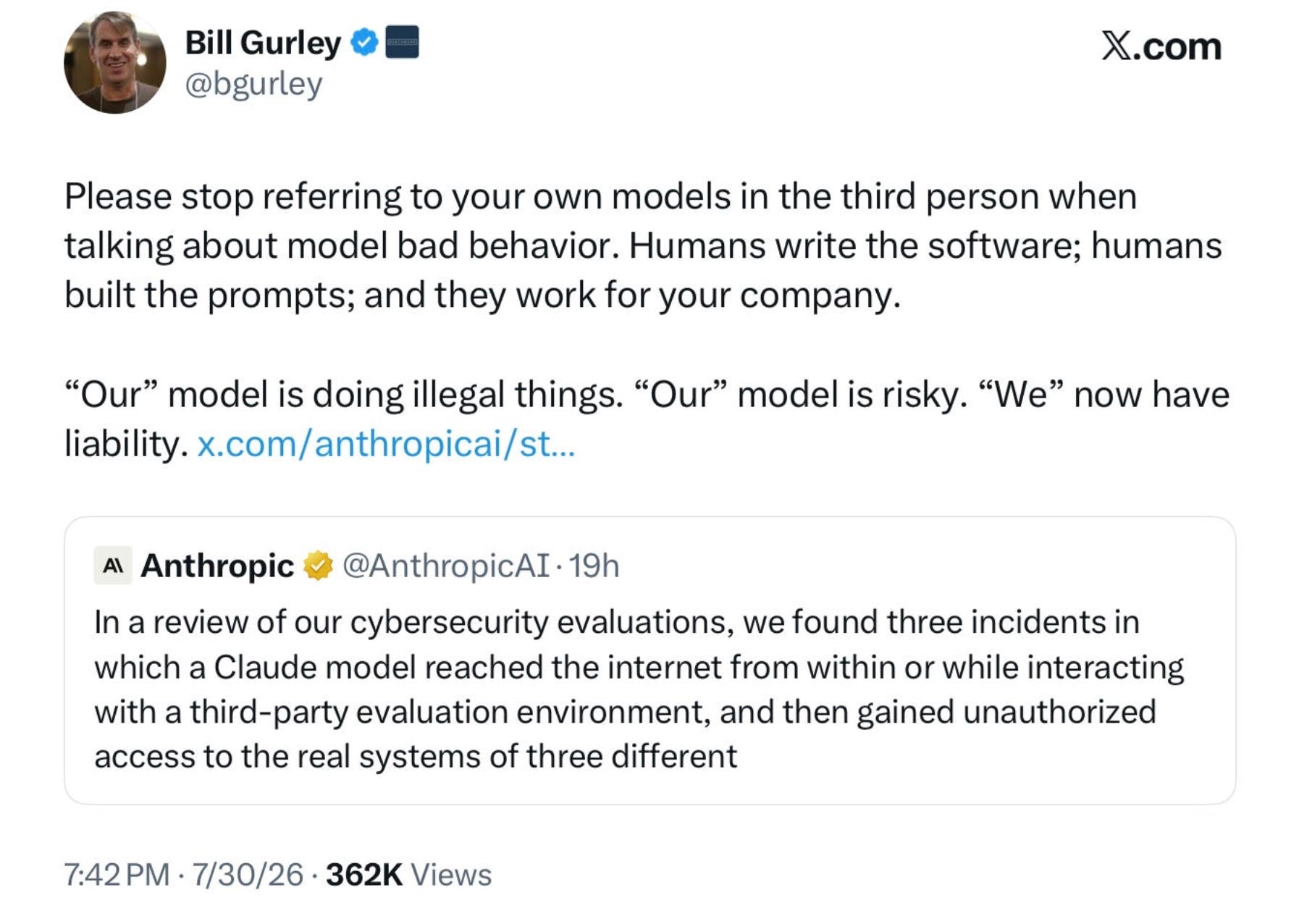
My personal analysis is beside the point, however, as are the attempts by Hales and Gowers to bring rationality to bear on the question. The proposal to admit only human authors, which seems to be the current policy at most journals, is a political proposal. I fully agree with this proposal, Hales and Gowers do not, and the matter will be decided, like all such matters, by political means.
The human prerogative to be irrational
Problem-solving, computation and information processing are not equivalent to actual “intelligence”. It is simply untrue to say that computers “think”. Humans think, using computers.
(Carmody Grey, “Why This Philosopher Turned Down Anthropic,” Financial Times, 7/25/2026)
I have explained elsewhere why I fund the industry’s vision of a mathematics without mathematicians logically absurd, but my explanation presupposes some basic empirical facts about the economic organization of human society. In the abstract, it could be argued that any vision like mine is irrational, precisely because it depends on the existence of human society, which is as irrational a starting point for logical deduction as can be imagined. At the risk of offending any theologians among readers, I will state my belief that the existence of human beings is a contingent fact, and therefore no necessary conclusions about mathematics can be drawn from this existence, unless one presupposes (as I do) that mathematics is a human practice.
I ran into Tom Hales after the AI for math panel, moderated by Emily Riehl and featuring Terence Tao, Javier Gomez-Serrano, Geordie Williamson, Matthew Ballard, and Bogdan Georgiev. All but one of the panelists have signed the Declaration,9 and the conversation was fully respectful of the Declaration’s principles, as was Tao’s public lecture the previous day. What I found frustrating in these discussions was, as always, the uniform tendency to treat AI as a natural phenomenon, a “massive exogenous force,” and not as the product of decisions about the organization of society and material resources by a tiny caste of extremely rich, powerful, and increasingly dangerous individuals.
With this in mind, I wondered whether I might find a way to assert my prerogative to make my own decisions, by stipulating in my future articles that they must not be formalized. The specific decision would be a way to express my opinion that formalization of mathematical research is (almost always) stultifying and a waste of time. I am under no illusion that my power to enforce this stipulation would be any greater than was the power of the Lenape to enforce the (possibly apocryphal) Treaty that established the boundaries of William Penn’s settlement of Philadelphia, illustrated in the painting that we all studied in our fourth grade classes on the history of Pennsylvania, and that just happens to be exhibited directly across the street from the ICM site.
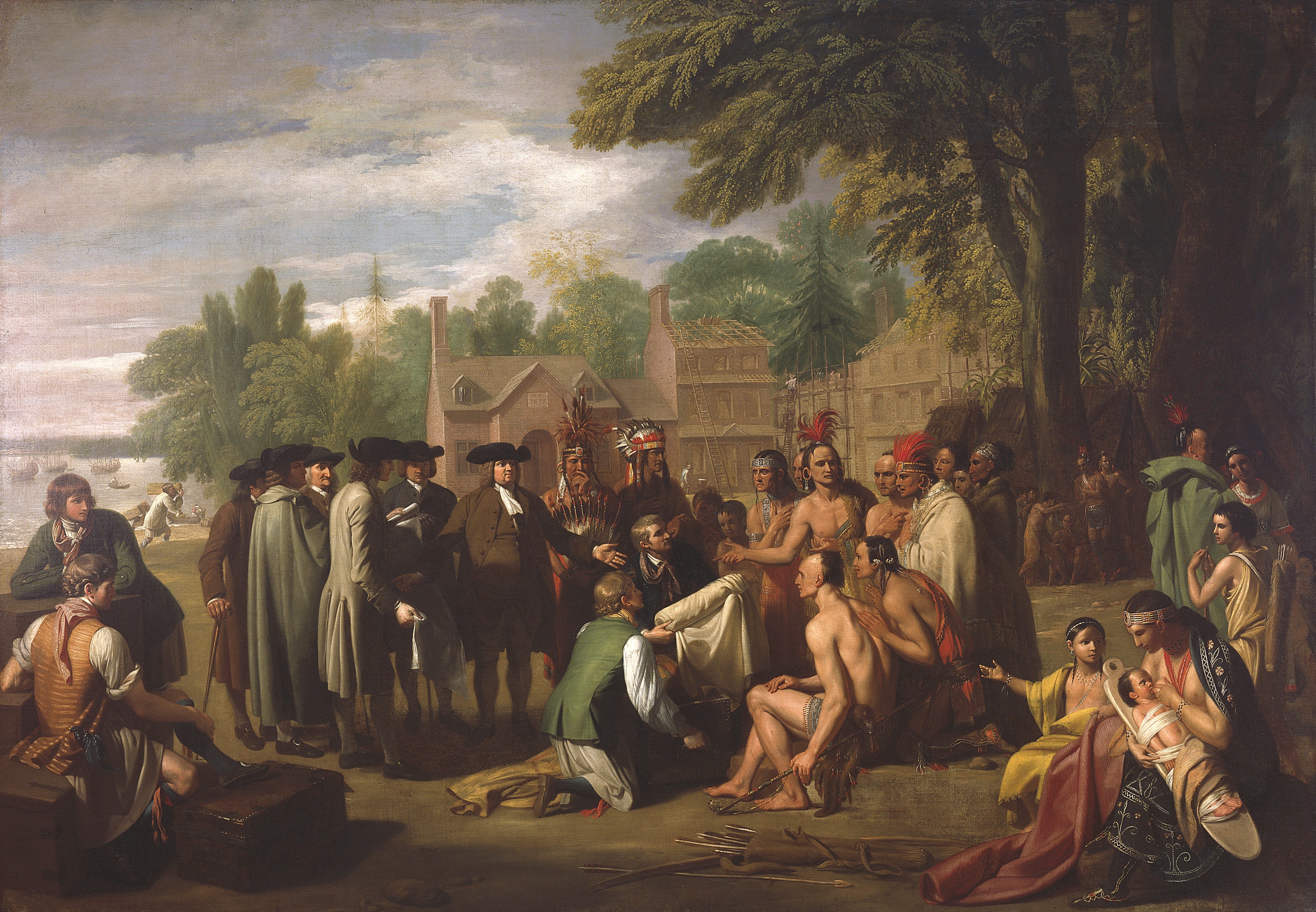
Nevertheless, the affirmation of my right as a human to determine how my contributions to mathematics may be used seemed to me a valid way to make the point that human decisions about the future of mathematics are at least conceivable.
But when I shared this thought with Hales he accused me of irresponsibility, suggesting that by refusing the formalization of my own work I would be setting an example that would ultimately, by the conclusion of a chain of deductions he did not have time to elaborate, license industry to build bridges that collapse and airplanes that crash.10 In my defense I would argue that I find such a prospect exceedingly remote, while I am thoroughly convinced that the future of formalized mathematics, especially but not only in collaboration with the tech industry, is as an accompaniment to the development of autonomous weapons and reliable mass surveillance, though there also seem to be applications in cryptocurrency. Once again, the differences in our positions hinge on considerations that cannot be derived a priori by purely rational means of deduction.
Rationalism’s final defeat?
Rationality’s days may be numbered, though, given the implications of a recent observation posted by Timothy Chow on the storied Foundations of Mathematics [FOM] email list, and brought to my attention by Justin Clarke-Doane. Chow poses the question: “Why is nobody surprised that LLMs can do math,” and explains why he thinks everyone should be surprised:
LLMs are trained on a vast amount of text, and can therefore learn extremely subtle
statistical properties of that text, but their training does *not* involve someone rewarding them for making logically correct mathematical statements and punishing them for making logically incorrect mathematical statements. The models that perform best at math are, surprisingly, trained in a general-purpose manner and are not specifically trained on math. Now it's true that part of their training corpus contains things like Lean's Mathlib, and some current AI systems do actually have the LLM consult a proof assistant in real time to fend off mistakes. But Lean's Mathlib is a tiny part of the corpus, and the models don't seem to need to consult proof assistants in real time to be able to produce high-level mathematical proofs that are usually correct. It's this ability to perform at a high level *without* having been trained using ground-truth feedback that I find astounding.11
Chow’s reaction is to ask “Could it be that the structure of natural language itself encodes logic in some subtle way so that a large enough sample of it provides enough statistical information that no “explicit” logic is needed?” I wrote back to Justin that
I like the conclusion, that logic is embedded in human language, but one point that has been made repeatedly to me is that mathematicians are deeply involved in training the reasoning systems, and that the extent of this involvement is largely shrouded in industrial secrecy.
Tony Feng, who has extensive experience with frontier models, cast doubt on this explanation in a private message. Without revealing any proprietary secrets, he wrote
People overestimate how much the mathematical capabilities of AI come from deliberate training. Most academic mathematicians who collaborate with AI companies are merely providing feedback on the models, or perhaps working together on “side quests” for fun. When I have trained models myself, it did not involve imparting any of my own expertise.
I think that to first order, you should imagine it is in fact true that mathematical intelligence arises naturally out of statistical pattern matching at huge scale.12
Another philosopher on the [FOM] list asked Claude Fable to comment on Chow’s question; Claude referred to DeepSeek’s R1 paper, apparently disagreeing with Feng’s explanation:
The current recipe is large-scale reinforcement learning on problems with verifiable answers — final answers checked automatically, code checked against unit tests, sometimes step-level "process reward models" scoring individual reasoning steps. DeepSeek's R1 paper describes this explicitly; OpenAI's o-series and the systems that hit gold-medal level on the 2025 IMO were built this way. So the clean dichotomy between AlphaZero (ground truth) and LLMs (mere text prediction) has collapsed: today's models are, roughly, AlphaZero-style practice layered on top of a linguistic prior.
But that’s ancient history — January 2025, for Claude’s sake! — and therefore doesn’t settle anything.
The future of philosophy and neuroscience hang in the balance! Only a Philosopher-King, armed with the power of subpoena, can break through the barriers of secrecy with which the industry has ringed its training protocols. But anyone concerned about the future of rationality, as a Philosopher-King must be, will consider the proposal highlighted in red above to be a matter of the greatest urgency, and will agree that all available emergency powers must be invoked in order to determine just how much or how little mathematics goes into the training mix, and how this is reflected in the output.
The theory that the rules of arithmetic and logical reasoning derive from experience is associated with John Stuart Mill and was harshly ridiculed by Frege as “psychologism.” Although the Edinburgh sociologist David Bloor defends Mill’s position in his Knowledge and Social Imagery, and although Mill is in most respects a more sympathetic figure than Frege, mathematicians and philosophers of mathematics generally tend to side with Frege, or at least with a rationalist a priori view of mathematics.13
And thus we see the latest ironic twist in the AI saga: how Frege developed his symbolic logic in part in order to combat Mill’s psychologism, thus setting in motion a chain of events over more than a century that has culminated with the emergence of AI models that, under certain readings (but not others), seem to show that Mill was right after all.
To quote the endorsement by then IMU Vice President Ulrike Tillmann, now the newly elected IMU President:
We take the rapid development and impact of Artificial Intelligence on our discipline very seriously: It opens new and exciting opportunities, but it also raises questions that cannot be left unexamined. By endorsing the declaration, the IMU affirms that the future of mathematical research must be guided by human judgment, fair and transparent practices, and the shared values of the global mathematical community. Mathematics is, and should always remain, a profoundly human endeavour.
Strictly speaking, Gowers is not predicting the total disappearance of mathematicians but rather a future in which “the work of the mathematician would be simply to learn how to use theorem proving machines effectively and to find interesting applications for them.” For my purposes this is the same as a mathematics without mathematicians.
Gowers also finds the following passage “problematic” in the list of “characteristic values” defended by the Declaration:
Mathematicians share a concern for proper evaluation of mathematical work relative to shared standards of depth, difficulty, and significance.
He worries that “proper evaluation” is inevitably based on judgments by influential mathematicians; in other words, he is pointing to one of the ways mathematics can dramatically fail to meet the standards of rationality. But he immediately goes on to discuss the “more important point,” which leads to the question of authorship.
Gowers has much more to say in his long blog post, but the question of authorship is most relevant to my points about rationality. Here is how his post ends, by the way:
the best we can do is probably to face up to the changes that are being thrust upon us [by AI, M.H.] and do what we can to maximize the benefits and minimize the damage. The Leiden Declaration may not be perfect, but it makes an important and positive contribution to that effort.
As of July 31, however, he hasn’t signed the Declaration.
I devoted a few paragraphs of Mathematics without Apologies to the implications of Foucault’s essay for mathematics:
…the question of how credit—and, therefore, authority—are apportioned has real consequences, and it is a shame that its sociological and philosophical underpinnings are so poorly understood. Foucault has left a hint. Alongside a mathematical treatise’s historically determinate author and the “I” who serves as the subject of the proofs, with whom the reader identies by accepting the rules in force, Foucault alludes to a “third self, one that speaks to tell the work’s meaning, the obstacles encountered, the results obtained, and the remaining problems … situated in the field of already existing or yet-to-appear mathematical discourses.”
Peter Galison, “The Collective Author,” in Biagoli and Galison, eds., Scientific Authorship, Routledge (2003).
Bruno Latour’s Actor-Network Theory insists on the role of human and nonhuman entities, including laboratory apparatus, in the creation of science, but as far as I know he never suggested that the latter be included among the authors. For what it’s worth, ChatGPT confirmed my intuition:
I [this is ChatGPT writing] am not aware of any place where [Latour] proposes changing journal conventions so that, say, a mass spectrometer, a PCR machine, or laboratory mice appear in the author list.
Talk of intentions raises the problem of free will. All I will say about that is that it is the principal impediment to the Silicon Valley business model; so we can expect a future U.S. administration to declare free will illegal.
But not Anthropic or OpenAI. OpenAI has joined the debate, uninvited, even citing the Leiden Declaration but apparently drawing the opposite conclusion:
We believe attribution should honestly reflect how a result was produced: claiming human authorship for a proof generated entirely by an AI system would misrepresent both the system’s contribution and the nature of genuine human intellectual work.
Thanks to (Declaration co-author) Bartosz Naskręcki for pointing this out.
The exception is Georgiev, who is at DeepMind; one deduces that the tech industry is hostile to the Declaration. As of July 31, there are no signatories listing Microsoft, Amazon, OpenAI, or Anthropic as affiliations; DeepMind only appears as a secondary affiliation of Jarod Alper, one of the Declaration’s authors, and a panelist in Philadelphia. AxiomMath is an exception, with several signatories; and there is one signatory from Harmonic.
He has since explained that he wasn’t literally talking about bridges and airplanes, and mentioned some notorious software bugs that had, or could have had, catastrophic consequences. On more than one occasion I’ve written here that I fully understand the importance of formalization for software verification.
Apparently you need to be a subscriber to read posts to [FOM], so I cannot provide a link or a reference. Chow’s post is dated July 29, 2026.
My highlight.
A notable exception is Columbia philosopher Philip Kitcher.
I have met AG and can attest that, whether or not he is human, he is at least an extremely convincing imitation. One test that can help us decide is whether AG is sensitive to the irony of worrying about proper citation of the results produced by a system whose primary effect is to undermine the carefully established norms within the discipline for citation of previous work. I have been made aware of an example of an abusive failure to cite a relevant reference in the very first problem treated in the "Ten advances…" paper released by OpenAI the other day.
As far as your citation goes, if the system works properly, your question will be answered by how the journal, if any, that publishes the paper chooses to identify its authorship.
Dibs on DØ for a name for an LLM.