About that Erdős problem
Another missed opportunity for mathematicians

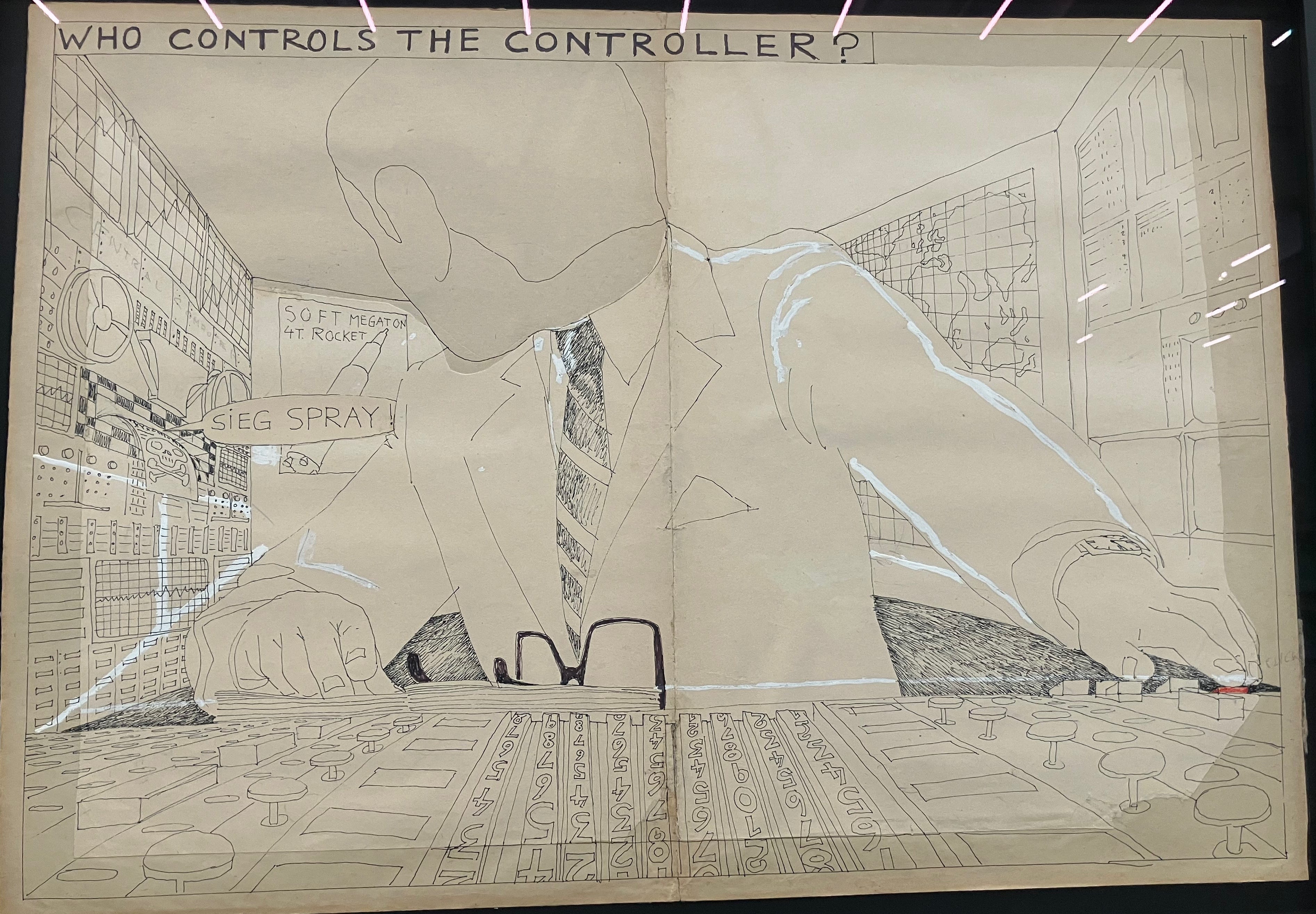
Although I was busy with the kind of activity that typically occupies the time and the imagination of a working mathematician, and that, though it doesn’t attract much attention from the news media, we have every reason to believe will continue to do so for the foreseeable future, it was impossible to avoid hearing about OpenAI’s latest announcement concerning the construction (in less than five pages) of a counterexample to the Erdős unit distance conjecture.
The announcement contained comments by nine prominent mathematicians. It came in the middle of a week marked by more than the usual crop of news items about AI. OpenAI was notably gearing up for an IPO, as was Anthropic, while SpaceX’s already filing with Nasdaq included language like
the light of consciousness will not be tied to a single planet subject to the inevitable hazards of a harsh and vast universe
Those of us whose pensions depend on financial markets are thus on track to share in the losses as well as profits from Silicon Valley’s massive bets, because, as Financial Times reports
…new “fast entry” rules thrust the stocks straight into Wall Street indices.
The rules, implemented this month by Nasdaq, mean billions of dollars of passive money will automatically flow to the three companies shortly after they go public, driving their share prices higher but forcing investors to sell other stocks
It was also the week when Eric Schmidt, former Google CEO, was one of several speakers met with boos at college commencements, and articles about the AI backlash filled both major and obscure media,1 so that Obama’s campaign manager David Plouffe is warning of a “political backlash that could make AI the dominant issue in the 2028 presidential race.
Finally, this was the week when Trump, reacting to “pressure from Silicon Valley,”
thus postponing meaningful regulation yet again.
So how did those nine mathematicians take advantage of this exceptional opportunity to participate in, or at least to show they are not totally oblivious to, what may well be the most consequential political issue of our time, one of the few that genuinely appears to transcend partisan divisions?
The end of Victor Wang’s contribution came closest to meeting the moment:
The implicit social contract between mathematicians and AI companies deserves further attention. When Hajir, Maire, and Ramakrishna wrote their beautiful papers [19, 20], did they have in mind that an AI might eventually use their work (as the CoT likely indicates) to derive headline results, potentially with significant ensuing financial implications? When we make our work freely available on the arXiv, do we all implicitly want it to be freely available to AI as well?
I do not want to comment further on the trajectory of AI, which seems to me to be a complicated question involving physics, materials, society, and the environment.
Melanie Matchett Wood’s comment pointed out reasons to be cautious about drawing conclusions from the OpenAI announcement —
This result does not show us all the times AI has claimed to have a proof of something and been wrong. Without that context (which many of us have just from personal experience), it is also easy to draw incorrect conclusions about the current state of AI and research mathematics.
but did not address the concerns behind the growing AI backlash. And Tim Gowers included a parenthentical remark, in the middle of his characteristically thoughtful analysis of technical matters related to the finding of a counterexample:
(Here I am assuming that there will at least be the usual kinds of efficiency gains, where what a large model can do this year, a much smaller one can do next year. Without that, solving lots of problems might be too expensive, not to mention environmentally unfriendly.)
That’s all. But there will undoubtedly be opportunities in the future, as the Wall Street Journal is simultaneously running articles about OpenAI’s upcoming IPO and warnings by engineers that “The artificial intelligence supposedly capable of replacing well-paid software developers is flooding the world with bad, potentially even dangerous, code.” Let’s hope our colleagues will not be afraid to participate in the public debate.
If I were asked what I think of the OpenAI announcement, I would quote Cal Newport’s observation in Gary Marcus’s Substack newsletter, whic is consistent with the questions raised in my previous post:
There are few markets smaller and less lucrative than professional academic mathematics.
And then I would defer to the quotation from environmental policy analyst Amanda Ianthe Greene, which you can read on Graham Lovelace’s Substack newsletter, under the headline “The backlash against AI is real, and growing. How might Big Tech respond?”:
“No, Eric Schmidt, the question is not ‘whether we will shape AI’,” wrote :
“The question is who owns it, who controls how it’s used, who benefits from it, who profits from it. AI was built on the backs of all of us. Our writing, our art, our social media, our personal data, our research and reports. We should all own it and share in the profits.”
> The implicit social contract between mathematicians and AI companies deserves further attention
It certainly does, and locally I have been disappointed in the how slow we are to build that social contract. For some years, and through two international reviews (2004 and 2010), the gap between mathematics and computer science in the UK has been identified as a weakness. AI should be seen as a novel and well-supported source of new challenges and new connections capable of being a benefit to the intellectual health of research in mathematics. By this I don't just mean the application of AI systems to mathematics, important as this might be. I mean particularly the development of the theories, techniques and tools for principled understanding, reasoning and quantification of AI systems.
I wrote a note about this at https://sotaletters.substack.com/p/mathematical-challenges-from-ai-ethics
> We should all own it and share in the profits.
Communism. You're talking about communism!